

For families around Indiranagar, HAL 2nd Stage, Domlur, Ulsoor, Jeevan Bhima Nagar, and 100 Feet Road, bringing ICU-level care home can feel like the safest next step after a tough hospital stay. When we set up a home ICU, we’re usually creating a hospital-like monitoring and support environment at home for a stable but high-need patient, with the right equipment, trained staff, and clear escalation plans.
In this guide, we’ll walk through a step-by-step process for planning the room setup, arranging oxygen and monitoring, confirming power backup, and setting daily care routines. We’ll also explain how we align care with the treating doctor’s instructions, because our focus stays on safety, hygiene, and continuity, not on promising outcomes we can’t control.
Home ICU care is commonly used for post-hospital recovery, elderly care that needs close observation, and long-term respiratory support (such as BiPAP, tracheostomy care, or oxygen therapy). If you’re comparing options for Home Nursing Services in Indiranagar Bangalore, we’ll share practical checkpoints to help you choose a reliable team and know what questions to ask, especially if you’re coordinating care remotely as an NRI.
If you’re considering a home ICU setup soon, we can help you map the needs clearly and plan the next steps with confidence, starting with a simple assessment and a clear care plan.
Step-by-step Home ICU setup process in Indiranagar Bangalore, from doctor plan to day-one care
When we set up a home ICU in Indiranagar, we treat it like moving a small, well-run ICU into one room. The goal is continuity. That means we match the treating doctor’s plan, prepare the home for safe care, install only what’s needed, and start day-one routines with clear roles.
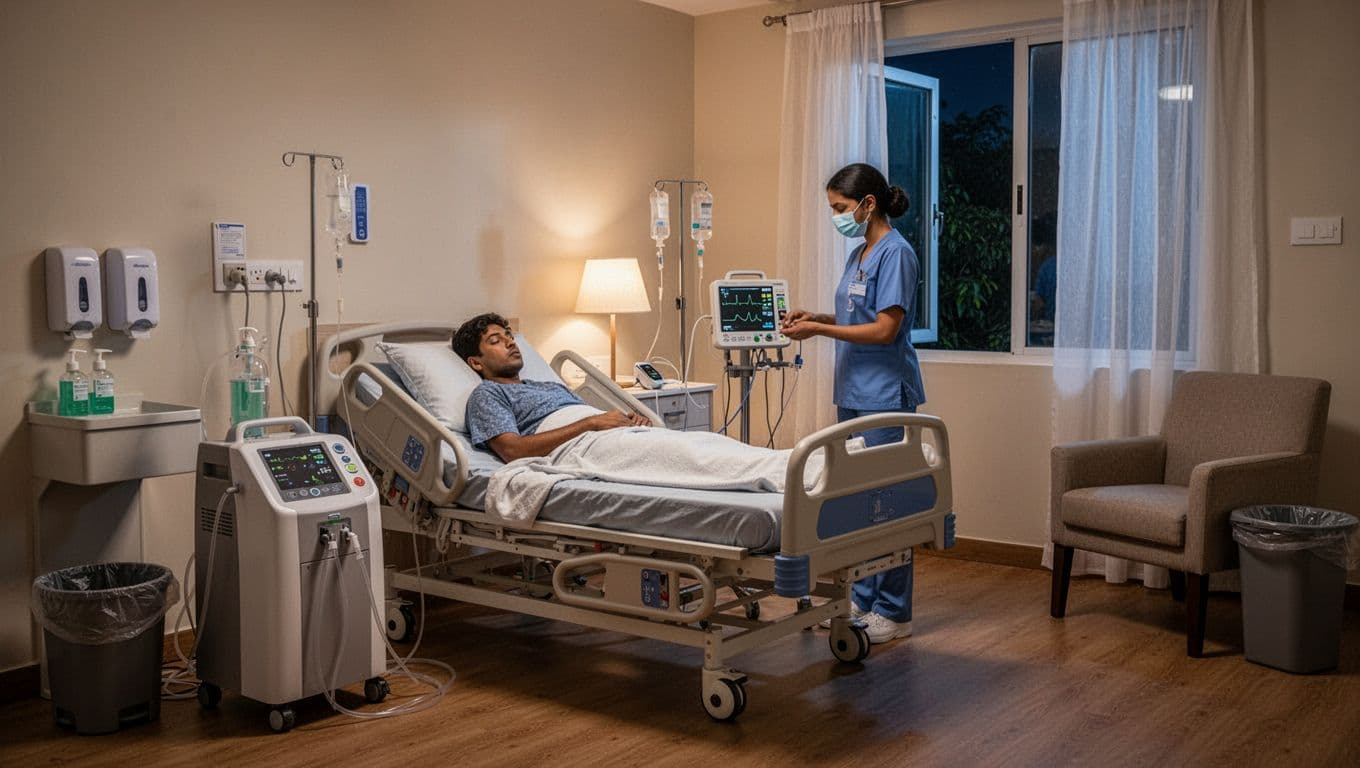 An example of a calm home ICU room layout with essential equipment and nursing support.
Medical assessment, care plan, and discharge coordination (we start with the treating doctor)
We begin with the treating doctor because home ICU care must follow doctor’s orders and documented protocols. Before anything comes home, we confirm the patient is stable enough for home-based critical care. Stability does not mean “fully well.” It means the doctor agrees the patient can be managed at home with defined monitoring and a clear escalation plan.
Next, we collect and verify the discharge paperwork so nothing gets missed in the handover. We typically ask for:
- The discharge summary with diagnosis, procedures, and current status
- A medication chart (dose, timing, route, and what to hold)
- Oxygen targets (for example, SpO₂ range, flow rate guidance, and when to call)
- A diet and fluid plan, including restrictions and feeding method if needed
- A written escalation plan (warning signs, what action to take, where to go)
- The follow-up schedule (doctor review, labs, dressing changes, physio)
Just as important, we align expectations with the family. We confirm what everyone can manage at home, what the nurse will handle, and what needs hospital support. If family members live abroad, NRIs can join calls or video meetings so decisions stay shared and transparent.
If the plan is not written down, it’s easy to drift. We stick to documented orders so day-to-day care stays consistent.
Home readiness check, room layout, power backup, and infection control basics
A home ICU works best when the room supports the routine. We usually choose a quiet room with minimal foot traffic, because rest matters and alarms can be stressful. Ventilation should be good, but we avoid direct dust and strong cooking smells near the patient.
We set up the room like a “care station,” simple and repeatable. A practical layout includes:
- A hand-hygiene point near the door (soap, sanitiser, clean towels)
- Space around the bed for nursing care, transfers, and equipment access
- A caregiver chair and small surface for a notebook, phone charger, and supplies
- Night lighting that is soft but bright enough for safe checks
- A safe storage area for medicines and disposables, away from heat and children
- A clear waste disposal plan (segregation, bags, and a routine for removal)
Power reliability is non-negotiable for oxygen and monitoring. We check plug points, add surge protection, and plan backup such as an inverter or UPS for critical devices. Basic fire safety also helps, including a working extinguisher and keeping cylinders away from flames and smoking.
In Indiranagar, access can affect timelines. Apartments near 100 Feet Road or in busy lanes may have delivery restrictions, lift rules, or parking limits. We coordinate with the building staff early so equipment can move in without delays.
Equipment and monitoring setup, what gets installed and how long it can take
Equipment is never “one size fits all.” We install what the doctor prescribes and what the patient’s condition requires. For some patients, that’s oxygen and close monitoring. For others, it includes airway support and infusion therapy.
Common home ICU equipment (based on need) may include:
- Oxygen cylinder or concentrator (sometimes both for backup)
- Pulse oximeter for oxygen saturation and pulse
- Suction machine for airway clearance when prescribed
- Nebulizer for inhalation therapy
- Cardiac monitor for continuous parameters when indicated
- Infusion pump for controlled IV medicines or fluids when ordered
- Air mattress to reduce pressure injury risk
- DVT pump for patients with low mobility, if advised
- BiPAP or ventilator (only when prescribed, with trained support)
- IV stand and bedside accessories for safe line management
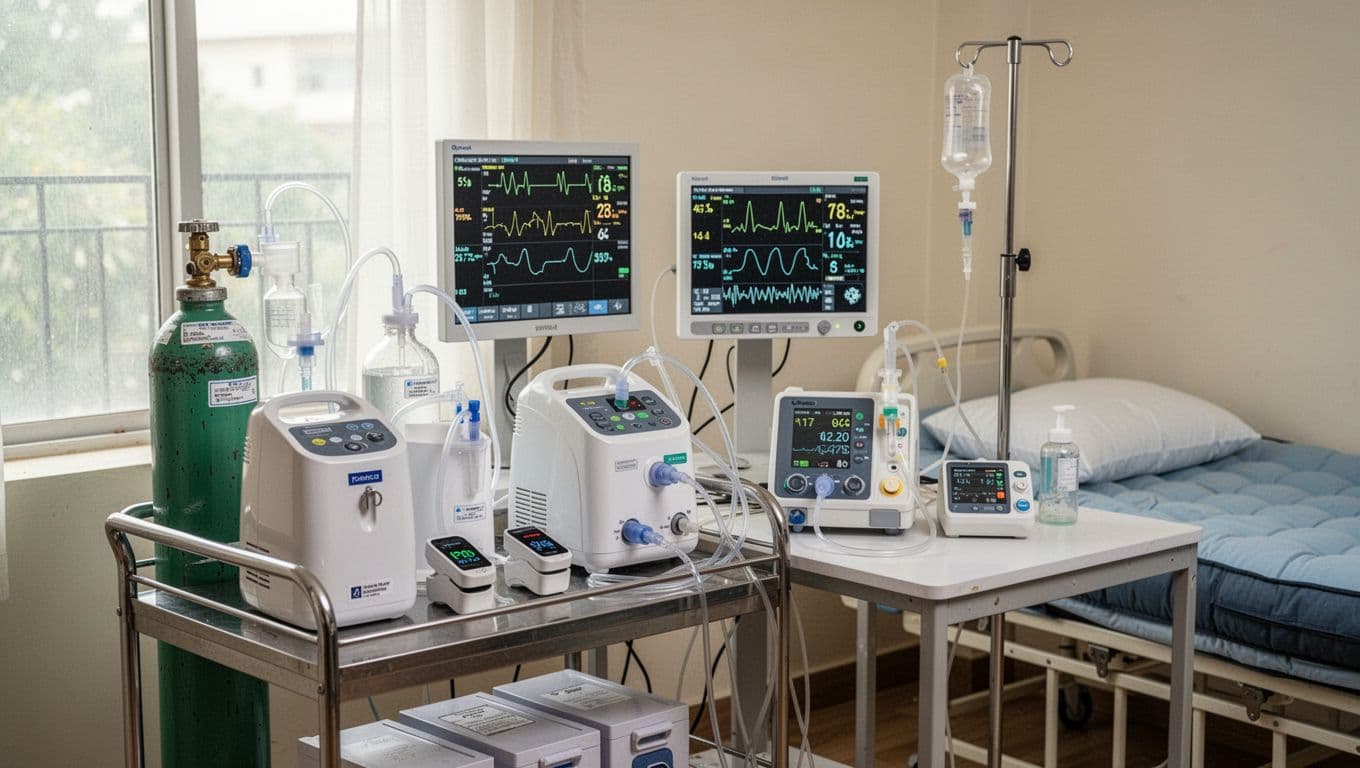 Typical home ICU equipment arranged for quick access and safe use.
In many Indiranagar setups, installation often takes several hours once the room is ready. In some cases, it can happen the same day as discharge, especially when documentation, space, and power backup are already confirmed. We also test each device, set alarm limits as per plan, and show the family basic do’s and don’ts before we start routine care.
For a general reference on what home ICU services often include, families can review ICU at home services in Bangalore.
Nurse and caregiver handover, the first 24 hours of ICU-level routines at home
The first 24 hours set the tone. We focus on steady routines, clear documentation, and calm communication. Depending on the patient’s risk level, staffing can include a critical care nurse for 24/7 coverage or shift-based nursing with defined handovers. In homes using Home Nursing Services in Indiranagar Bangalore, we keep the plan practical so families can sustain it.
We start with a structured handover and baseline assessment. Then we move into ICU-style routines, adapted for home:
- We record vitals and observations on a schedule, and we note trends, not just single readings.
- We follow medication rights (right patient, drug, dose, time, route, documentation), plus allergy checks.
- We provide airway care basics when prescribed (positioning, suction, humidification guidance).
- We follow a turning schedule and skin checks to reduce pressure injuries.
- We support feeding and hydration as per the diet plan (oral, tube feeds, or restrictions).
- We coordinate early physio and mobility when the doctor advises, because stiffness builds fast at home too.
A simple first-day checklist keeps everyone aligned:
- Emergency contacts on paper and in phones (doctor, ambulance, nurse supervisor).
- Nearest hospital plan (route, lift access, and what to carry).
- One documents folder (discharge summary, medication list, insurance, IDs).
- Alarm limits agreed with the clinical team, written clearly near the bed.
If we’re planning a home ICU in Indiranagar soon, an early enquiry helps us line up the doctor’s plan, room readiness, and nursing coverage before discharge pressure builds. For equipment ideas and safety considerations, ICU-at-home setup guidance can also help families ask better questions during planning.
Choosing the right team, Home Nursing Services in Indiranagar Bangalore, caregivers, and elderly support that fits our situation
When we bring ICU-level routines home, the team matters as much as the equipment. The right mix keeps care safe, consistent, and calm, especially for seniors who may already feel tired, anxious, or disoriented after a hospital stay.
In Indiranagar, we usually choose between a home ICU nurse, a trained attendant (caregiver), or a combination of both. Think of it like a cockpit and cabin crew. One person handles clinical controls and decisions, while the other keeps the patient comfortable and supported through the day. When roles are clear, small problems get noticed early, and the home doesn’t feel chaotic.
Home ICU nurse vs trained attendant, who does what in real life
Here’s the practical difference we rely on when planning Home Nursing Services in Indiranagar Bangalore. A home ICU nurse handles clinical tasks that need nursing training, clinical judgement, and careful documentation. A trained attendant focuses on daily support, comfort, and safe mobility. Both roles are important, but they are not interchangeable.
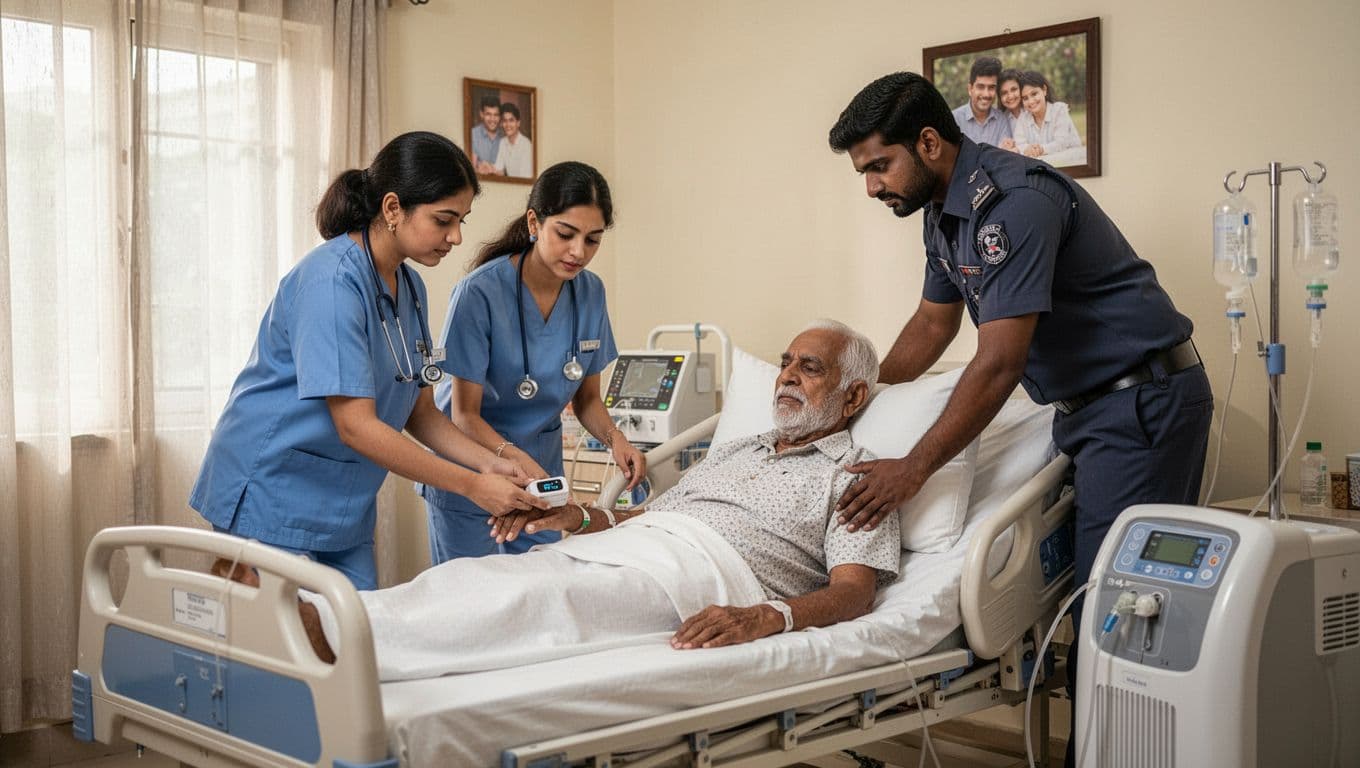 A home ICU nurse and trained attendant coordinating bedside care in a home setting.
A home ICU nurse typically takes responsibility for:
- Medication administration and safety checks, including timing, dose, route, and side-effect watch.
- Monitoring and clinical observation, such as vitals trending, oxygen response, and early warning signs.
- Line and tube care as ordered, for example IV cannula care, catheter care, feeding tube checks, and wound dressings.
- Tracheostomy care and suctioning only when the nurse is trained, the doctor has ordered it, and the plan is documented.
- Escalation and coordination, calling the doctor or arranging transfer if the patient deteriorates.
- Documentation, because notes protect the patient and keep every shift aligned.
A trained attendant usually supports with:
- Hygiene care, including sponge baths, oral care, grooming, and toileting support.
- Turning and positioning, plus pressure-area checks as guided by the nurse.
- Feeding support, such as assisting with meals, tracking intake, and helping the patient sit safely (without changing diet orders).
- Mobility help, like assisted walking, transfers, and fall-prevention support.
- Basic comfort measures, including bedding changes, room tidiness around the care zone, and calm companionship.
If a task could cause harm when done incorrectly, we keep it with the nurse, and we keep it documented.
Finally, with elderly support, how care is delivered matters. We insist on privacy, dignity, and consent, like keeping the patient covered during hygiene care, asking before touch, and limiting unnecessary room traffic. That respect builds trust quickly, which often makes day-to-day care smoother.
Questions we should ask before we book care (staffing, shift plan, supervision, and safety)
Before we confirm a provider, we can save ourselves a lot of stress by asking direct questions. Clear answers usually signal a well-run service. Vague answers often lead to last-minute surprises.
We can start with staffing and capability:
- What are the nurse’s qualifications and registrations? Ask if the nurse is GNM, BSc Nursing, or critical-care trained, and what “ICU exposure” means in daily work.
- Have you handled cases like ours at home? For example, oxygen therapy, BiPAP, suctioning, tracheostomy, stroke rehab, or post-surgery monitoring.
- Who decides the care plan each day? We should hear “as per treating doctor’s orders” plus nursing notes and supervisor review.
Next, we lock down shifts and supervision, because fatigue causes errors:
- Shift duration and rotations: Is it 8, 10, or 12 hours, and do staff rotate often?
- Handover method: Do they use a written logbook, SBAR-style handover, or an app update?
- Clinical supervision: Is there a nurse supervisor call line, and how often do they review notes?
- Doctor availability: Can they coordinate home visits if our treating doctor wants that?
Safety questions should feel specific, not generic:
- Emergency escalation: What triggers an ambulance call, and who calls first, nurse or family?
- Infection control: Hand hygiene rules, glove use, cleaning of suction jars, and disposal of biomedical waste.
- Backup staff: If the nurse falls sick, how fast can a replacement arrive?
For NRIs and family members coordinating remotely, updates matter:
- Daily update format: WhatsApp summary, vitals trend photo, or scheduled video calls.
- Who gets updates: One point of contact avoids confusion. For a useful reference list, we can compare our notes with questions to ask before hiring home nursing.
Finally, Indiranagar logistics are real, especially at night. We should ask:
- Response time to HAL 2nd Stage or Jeevan Bhima Nagar during peak traffic.
- Night shift travel plan: How does staff commute safely, and what happens if it’s raining or there’s a late arrival?
- Local familiarity: Do they know apartment entry rules, lift access, and parking constraints near 100 Feet Road?
If we want to avoid mismatches, we can request a short trial shift and a written scope of duties before starting. That one step often tells us if the team is the right fit, and it helps us move forward with confidence when we’re ready to enquire. For additional context on verifying home nurse qualifications in Bengaluru, we can also review home nurse hiring basics.
While this guide focuses on Indiranagar, Varolyn Healthcare provides reliable home care services across the entire Bangalore region.