Elder Care at Home in Bangalore: The 2026 Guide to Nursing, Physio, and Safe Eldercare
Medically reviewed by Varolyn Clinical Team, Registered Nurses & Care Physicians · 17 Jul 2026
Your Parent Is Getting Older — and That Changes Everything
Picture this: your 74-year-old mother just came home after a hip-replacement surgery at a Bangalore hospital. She is in pain. The stairs look scary. You are juggling work, kids, and a hundred WhatsApp messages from worried relatives. Sound familiar?
You are not alone. Millions of families across India face this exact moment every single day. The good news? Elder care at home in Bangalore has transformed dramatically. Today, world-class nurses, physiotherapists, and even ICU-level critical care can come to your door — no hospital traffic, no sterile waiting rooms, no separation from family.
This guide walks you through everything you need to know in 2026: what home eldercare looks like, which services matter most, how to keep your parent safe, and how to choose the right care team for your family.
What Is Elder Care at Home — and Why Does It Matter So Much in 2026?
Elder care at home (also called home healthcare for seniors) means qualified medical and support professionals visit your loved one's home to provide the care they need. Instead of your parent travelling to a clinic or staying in a nursing home, the care comes to them.
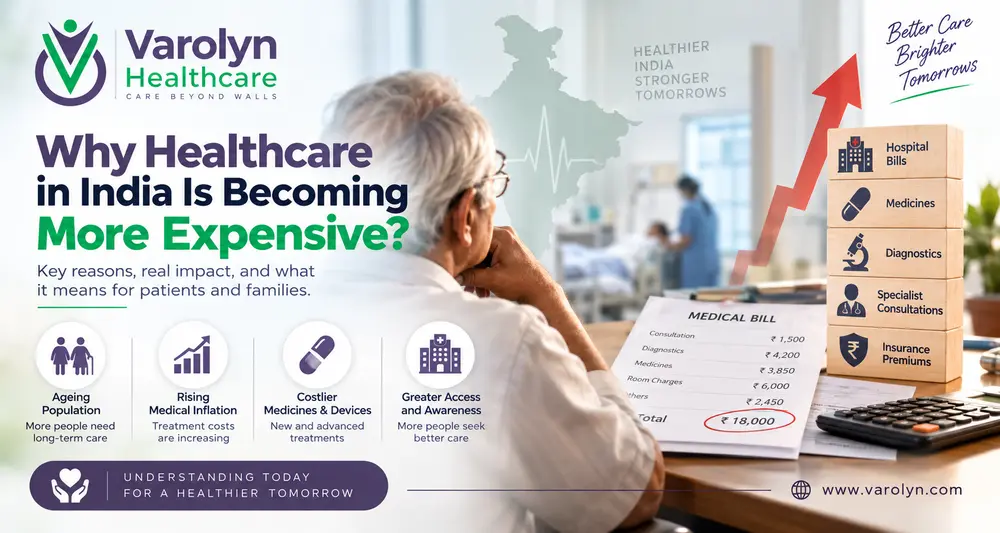
India's older population is growing fast. According to the United Nations Population Fund (UNFPA), India had over 149 million people aged 60 and above in 2022, and that number is expected to nearly double by 2050. Bangalore alone is home to hundreds of thousands of senior citizens — many living with family, many living alone.
At the same time, Indian families are changing. Adult children often work long hours or live in different cities. Joint families are smaller. And hospitals are expensive and overwhelming for elderly patients. Home-based care fills this gap beautifully.
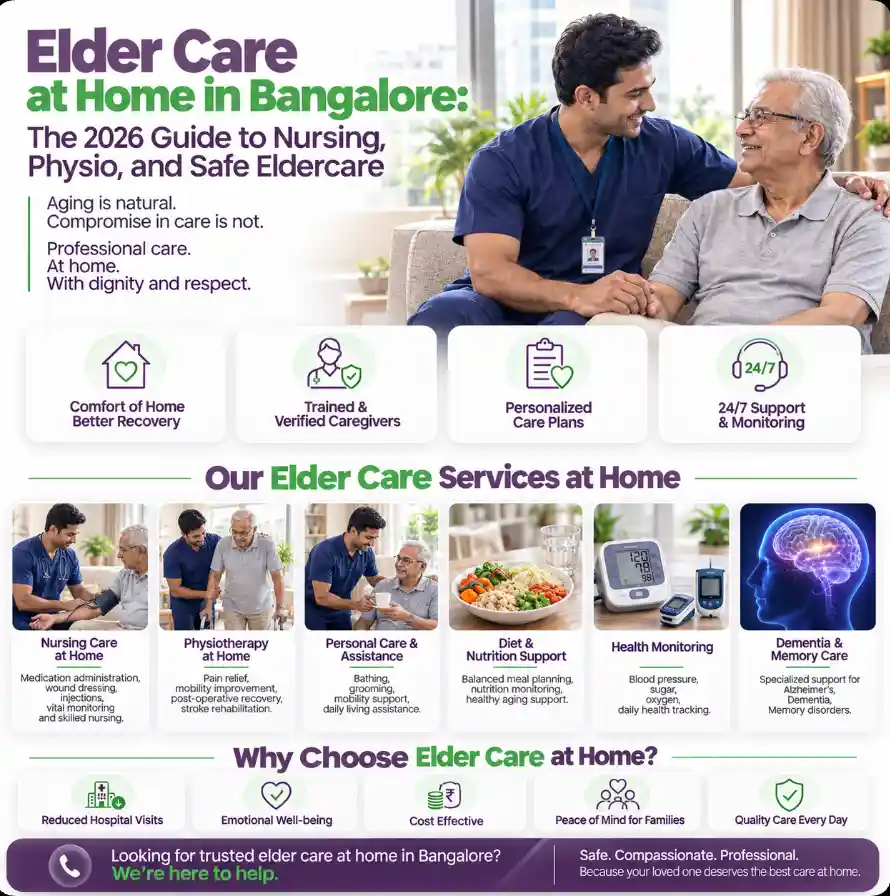
Key benefits of elder care at home include:
- Faster recovery in a familiar, loving environment
- Lower risk of hospital-acquired infections (germs picked up in hospitals)
- Personalised, one-on-one attention
- Greater dignity and emotional comfort for the elderly person
- Peace of mind for the whole family
- Flexibility — care can scale up or down as needs change
The 7 Core Elder Care Services Every Bangalore Family Should Know
Not all eldercare needs are the same. A frail 80-year-old with dementia (a condition that affects memory and thinking) needs very different support than an active 65-year-old recovering from a knee replacement. Here are the key services available at home in Bangalore today.
1. Home Nursing Care
A trained nurse visits your home on a scheduled basis — or stays full-time if needed. Home nurses can give medicines, dress wounds, monitor vital signs (blood pressure, oxygen levels, temperature, pulse), and manage tubes or medical devices such as catheters (small tubes that drain urine) or nasogastric tubes (thin tubes used for feeding).
Who needs it most: Seniors recovering from surgery, those with chronic illnesses like diabetes or heart disease, or anyone who needs regular injections or wound care.
2. Physiotherapy at Home
Physiotherapy (physio) uses specific exercises and hands-on techniques to improve movement, strength, and balance. A home physiotherapist visits your parent and designs a plan just for them.
After a stroke (when blood supply to part of the brain is interrupted), a hip fracture, or a joint replacement surgery, physio is not optional — it is essential. Research consistently shows that early, regular physiotherapy significantly speeds up recovery and reduces the risk of falls.
Who needs it most: Seniors after surgery, stroke, fractures, or those with Parkinson's disease (a condition affecting movement and balance) or severe arthritis.
3. ICU at Home (Critical Care at Home)
This is one of the most remarkable advances in modern home healthcare. ICU at home brings intensive care unit-level monitoring and equipment into your living room. Think ventilators (machines that help with breathing), cardiac monitors (devices that track the heart), and trained critical care nurses — all at home.
It is ideal for patients who are stable enough not to need a hospital bed but still require close, round-the-clock medical supervision. Studies and clinical experience show that familiar surroundings and family presence can actually improve outcomes for many critically ill patients.
Who needs it most: Patients with advanced COPD (chronic lung disease), severe heart failure, post-ICU recovery, or terminal illness who wish to be at home.
4. Post-Surgery Recovery Care at Home
Going home after an operation does not mean care stops. Post-surgery recovery at home includes wound care, pain monitoring, physiotherapy, medicine management, and nutrition support. A dedicated home care team makes sure your loved one heals correctly and complications are caught early.
Who needs it most: Anyone discharged after a major operation — hip or knee replacement, cardiac surgery, abdominal surgery, or cancer treatment.
5. Dementia and Alzheimer’s Care at Home
Dementia is a group of conditions that slowly affect memory, thinking, and daily function. It is not a normal part of aging, but it is increasingly common. Caring for a person with dementia at home requires special training and endless patience.
Trained dementia caregivers help with daily routines, prevent wandering (a common and dangerous behaviour), engage the person in gentle activities, and give family caregivers a much-needed break.
Who needs it most: Seniors diagnosed with Alzheimer's disease or other forms of dementia.
6. Palliative and End-of-Life Care at Home
Palliative care focuses on comfort rather than cure. It relieves pain, manages symptoms, and supports the emotional and spiritual needs of both the patient and the family. Many families in Bangalore now choose home-based palliative care so their loved one can spend their final days surrounded by familiar faces and memories.
Who needs it most: Patients with terminal (life-limiting) illnesses who wish to remain at home.
7. Daily Elder Care and Personal Assistance
Sometimes the need is not medical — it is practical. A trained attendant or caregiver can help with bathing, dressing, grooming, cooking, and gentle exercises. This kind of support preserves dignity and prevents exhaustion in family caregivers.
Who needs it most: Seniors with limited mobility, those who live alone, or families where the main caregiver needs regular relief.
Home Safety for Elderly Parents: Making Your Bangalore Home Elder-Proof
Falls are the number-one cause of serious injury in older adults worldwide. The World Health Organization (WHO) reports that falls are the second-leading cause of accidental death globally. In India, many homes — with their smooth mosaic floors, narrow bathrooms, and steep staircases — are unintentionally risky for seniors.
The great news is that simple, affordable changes can make a huge difference. Here is a practical checklist your home care team or an occupational therapist (a specialist in helping people do daily activities safely) can help you with.
Quick Home Safety Checklist
- Bathroom: Install grab bars near the toilet and inside the shower. Use a non-slip bath mat. Consider a shower chair.
- Flooring: Remove loose rugs or secure them with non-slip tape. Clear clutter from walkways.
- Lighting: Add nightlights in hallways, the bathroom, and the bedroom. Make sure all switches are easy to reach.
- Stairs: Fit sturdy handrails on both sides. Mark the edge of each step with bright tape if vision is poor.
- Bedroom: Keep the bed at a height the senior can get in and out of easily. Place a lamp or phone within reach.
- Kitchen: Store frequently used items at waist height. Use an anti-fatigue mat near the stove and sink.
- Medications: Use a clearly labelled pill organiser. Store medicines in a single, accessible location.
- Emergency: Keep a charged mobile phone or emergency call device with the senior at all times.
A professional home health nurse or physiotherapist from your care team can conduct a full home safety assessment and give personalised recommendations for your parent's specific condition and your home's layout.
Recognising Warning Signs: When Does Your Elderly Parent Need More Help?
It can be hard to know when occasional forgetfulness or slower movement becomes a sign that more support is needed. Here are the warning signs that families often miss — until something goes wrong.
- Repeated falls or near-falls — even one unexplained fall deserves medical attention.
- Unexplained weight loss — could signal poor nutrition, depression, or a hidden illness.
- Increasing confusion or memory problems — getting lost on familiar routes, forgetting names, missing medicines.
- Poor hygiene — stopping regular bathing, wearing the same clothes for days, unkempt appearance.
- Social withdrawal — avoiding friends, family, or activities they once loved.
- Difficulty managing medicines — missing doses or doubling up accidentally.
- Increasing breathlessness or chest discomfort — always requires prompt medical review.
- Worsening chronic conditions — blood sugar out of control, blood pressure swinging widely.
If you notice two or more of these signs, it is time to speak with a healthcare professional. Early intervention almost always leads to better outcomes.
The Emotional Side of Eldercare: What No One Talks About Enough
Caring for an aging parent is one of the most loving things a person can do — and also one of the most exhausting. Caregiver burnout is real. It happens when a family member gives so much for so long that they run out of physical and emotional energy.
Signs of caregiver burnout include constant tiredness, feeling resentful or guilty, neglecting your own health, and withdrawing from friends. If this sounds like you, please know: asking for professional help is not giving up. It is the smartest, most loving thing you can do — for your parent and for yourself.
Professional home care teams do more than care for the patient. They give family caregivers breathing room. A nurse or trained attendant can take over for a few hours a day, or even provide live-in care, so family members can rest, work, and stay healthy.
Emotional wellbeing tips for family caregivers:
- Accept that you cannot do everything alone — and that is perfectly okay.
- Share caregiving duties among siblings or other family members where possible.
- Schedule regular breaks — even an hour away can restore your energy.
- Talk to a counsellor or join a caregiver support group (many are available online in India).
- Let professionals handle complex medical tasks so you can focus on love and connection.
Nutrition and Medicine Management: Two Pillars of Senior Health at Home
Two of the most common — and most preventable — problems in elderly home care are poor nutrition and medication errors. Both can silently worsen a senior's health over weeks and months.
Nutrition for Seniors at Home
Older adults often have smaller appetites, reduced sense of taste and smell, difficulty chewing, or depression that kills hunger. Yet their nutritional needs remain high. Protein is essential for muscle maintenance. Calcium and vitamin D keep bones strong. Adequate fibre prevents constipation, which is extremely common in seniors.
A home care nurse or nutritionist can review your parent's diet, flag deficiencies, and suggest practical, tasty adjustments that fit South Indian food preferences. Small, frequent meals are often better tolerated than three large ones.
Medicine Management at Home
Many elderly people in India take five or more medicines daily. This is called polypharmacy. Managing this safely at home can be very challenging. Missed doses, double doses, or harmful drug interactions (when two medicines react badly with each other) are genuine risks.
A trained home nurse can:
- Set up and check a daily pill organiser
- Educate your parent and family on each medicine's purpose and timing
- Watch for side effects and report them to the treating doctor promptly
- Coordinate with the doctor if the medicine schedule needs adjustment
Never adjust or stop any medicine without consulting the treating doctor first.
Technology and Elder Care: Smart Tools That Are Changing Home Healthcare in 2026
Home healthcare in 2026 is smarter than ever. A range of affordable technology tools now supports eldercare at home in Bangalore and across India.
- Pulse oximeters: Small clip-on devices that measure oxygen levels in the blood — very useful for seniors with heart or lung conditions.
- Digital blood pressure monitors: Easy-to-use machines that give accurate readings at home, reducing unnecessary clinic visits.
- Teleconsultation (video doctor visits): Many Bangalore doctors now offer online consultations, so your parent can see their physician without leaving home.
- Wearable fall detectors: Smartwatches and wristbands that detect falls and automatically send an alert to a family member or emergency contact.
- Glucose monitoring systems: Continuous glucose monitors (tiny sensors worn on the skin) track blood sugar levels throughout the day — a major help for diabetic seniors.
- Medication reminder apps: Simple smartphone apps that send alerts when it is time to take a medicine.
Your home healthcare team can guide you on which devices are right for your parent's specific conditions and show family members how to use them correctly.
How to Choose the Right Elder Care Provider in Bangalore: 8 Questions to Ask
Not all home care services are equal. Choosing the right provider is one of the most important decisions your family will make. Here are the eight questions you should ask before you sign any agreement.
- Are your nurses and caregivers licensed and trained? Ask for qualifications — registered nurses (RNs) should have a BSc or GNM nursing degree from a recognised institution.
- Do you conduct background checks on all staff? This is non-negotiable for the safety of your elderly parent.
- Is care available 24 hours a day, 7 days a week? Medical needs do not keep office hours. Make sure there is a helpline you can call at 2 a.m.
- What is the handover and reporting process? A professional provider documents every visit and shares updates with the family and the treating doctor.
- Can the care plan change as needs change? Eldercare needs shift over time. Your provider should be flexible enough to add or adjust services quickly.
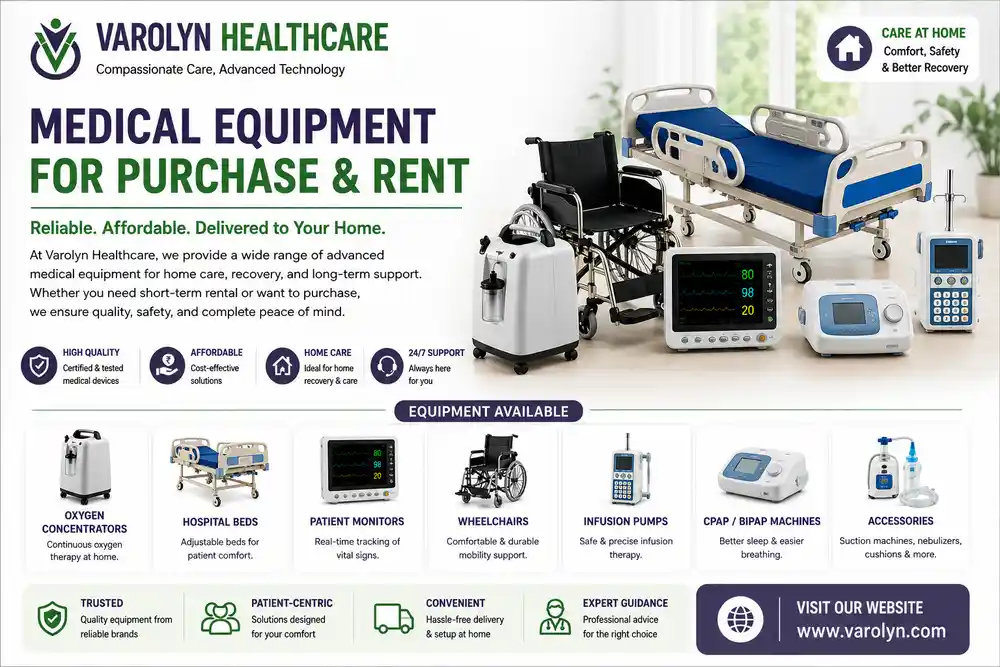
- Do you supply medical equipment as well? Having a provider who can also arrange hospital beds, wheelchairs, oxygen concentrators, or ventilators saves enormous hassle.
- How do you handle medical emergencies at home? There should be a clear protocol — including ambulance coordination if hospitalisation becomes necessary.
- What do other families in Bangalore say about your service? Ask for references or look for verified reviews online.
Why Varolyn Healthcare Is Bangalore's Trusted Partner for Elder Care at Home
At Varolyn Healthcare, we have built our entire service model around one belief: every senior deserves expert care in the place they love most — home.
Here is what sets Varolyn apart in Bangalore's growing home healthcare landscape:
- Qualified, verified professionals: Every nurse, physiotherapist, and caregiver on our team holds recognised Indian qualifications, is background-verified, and undergoes ongoing training.
- Comprehensive services under one roof: Home nursing, physiotherapy, ICU at home, post-surgery recovery, dementia care, palliative care, and daily elder care — all coordinated by a single team.
- Medical equipment supply: Hospital beds, wheelchairs, oxygen concentrators, suction machines, ventilators, and more — delivered to your Bangalore home.
- 24/7 clinical support: Our team is reachable around the clock. You are never alone with a medical concern at midnight.
- Family-centred approach: We treat the whole family — not just the patient. We train family members, keep everyone informed, and genuinely care about caregiver wellbeing too.
- Transparent, documented care: Every visit is logged. Every observation is shared with the family and the treating doctor. No guesswork.
- Serving Bangalore and beyond: We cover major areas across Bangalore — Koramangala, Whitefield, HSR Layout, Indiranagar, Jayanagar, JP Nagar, Yelahanka, and many more neighbourhoods — and also serve families across India.
Real-Life Story: How Home Care Changed One Bangalore Family's Life
Ravi's 78-year-old father, Mr. Krishnamurthy, suffered a mild stroke at their home in Jayanagar, Bangalore. After a week in hospital, the doctors said he was stable enough to go home — but he needed physiotherapy, nursing care, and close monitoring of his blood pressure and blood sugar.
Ravi was terrified. He worked a demanding tech job in Electronic City. His sister lived in Hyderabad. How could they manage?
They called Varolyn Healthcare. Within 24 hours, a care plan was in place. A nurse visited every morning, a physiotherapist came three times a week, and a trained attendant was with Mr. Krishnamurthy through the day. Ravi received daily updates on his father's progress — right on his phone.
Three months later, Mr. Krishnamurthy was walking with a stick, eating well, and playing carom with his grandchildren again. Home care gave him back his life — and gave Ravi back his peace of mind.
(This is a representative story. Individual outcomes vary and depend on the patient's specific condition, which should always be discussed with a qualified doctor.)
Ready to Take the First Step? Book a Free Elder Care Consultation Today
You do not have to figure this out alone. Whether your parent has just come home from hospital, is managing a chronic illness, or simply needs a little extra help day to day — Varolyn Healthcare is here to help you build the right plan.
Our process is simple:
- Call us or fill in our contact form — it takes two minutes.
- A senior care coordinator will speak with you (free of charge) to understand your loved one's needs.
- We propose a personalised care plan — transparent and flexible.
- Your care team is in place, often within 24 hours.
Give your elderly parent the gift of expert, compassionate care — in the comfort of home, surrounded by everything they love.
📞 Book Your Free Consultation with Varolyn Healthcare — Call Now
Because your parent deserves the very best. And so do you.
Key facts
- India had over 149 million people aged 60 and above in 2022, a number expected to nearly double by 2050, creating a massive and growing need for elder care services (UNFPA, 2023).
- The World Health Organization (WHO) identifies falls as the second-leading cause of accidental injury deaths globally, and older adults are at the highest risk — making home safety modifications a critical part of elder care.
- Research shows that patients recovering from illness or surgery in a familiar home environment often experience lower stress levels, better sleep, and faster rehabilitation compared to hospital stays.
- Polypharmacy — the use of five or more medications simultaneously — affects a large proportion of elderly patients in India and significantly increases the risk of harmful drug interactions and medication errors without proper nursing supervision.
- ICU-at-home (hospital-at-home) models have been shown in multiple international studies to reduce hospital readmission rates and improve patient satisfaction for appropriately selected patients.
- The Indian home healthcare market is one of the fastest-growing healthcare segments in the country, projected to expand significantly through 2026 and beyond, driven by an aging population, nuclear family structures, and rising hospital costs.
- Caregiver burnout affects a significant proportion of family members caring for elderly relatives in India — making professional respite and home care support not just a convenience but a health necessity for the whole family.
Frequently asked questions
What does elder care at home in Bangalore typically include?
Elder care at home in Bangalore can include home nursing (wound care, medicines, monitoring vital signs), physiotherapy, ICU-level critical care, post-surgery recovery support, dementia care, palliative care, and daily personal assistance like bathing and grooming. Services are tailored to the individual senior's medical and personal needs.
Is it safe to have a parent with a serious illness cared for at home instead of a hospital?
For many conditions, home care is as safe as — and sometimes safer than — a hospital stay, because it eliminates the risk of hospital-acquired infections and provides familiar surroundings that support healing. However, the suitability of home care depends on the specific illness and the senior's condition. A qualified doctor should always assess whether home care is appropriate for your loved one's situation.
How quickly can home nursing or elder care services start in Bangalore?
With a reputable provider like Varolyn Healthcare, home nursing and elder care services can typically be arranged within 24 hours of the initial consultation, in most parts of Bangalore. The care coordinator assesses your needs and deploys the right professionals promptly.
What qualifications should I look for in a home nurse or caregiver for my elderly parent?
A home nurse should hold a recognised nursing qualification — such as a BSc Nursing or GNM (General Nursing and Midwifery) degree — registered with the Indian Nursing Council or the relevant State Nursing Council. Caregivers and attendants should have formal training in elder care. Always ask your provider to confirm that all staff are background-verified and hold current credentials.
Can physiotherapy really be done effectively at home for seniors?
Yes, absolutely. Home physiotherapy is highly effective for seniors recovering from strokes, joint replacement surgeries, fractures, and conditions like Parkinson's disease or severe arthritis. The physiotherapist designs a programme specifically for your parent's home environment, which often makes exercises more comfortable and easier to continue independently between sessions.
How do I know when my elderly parent needs professional home care versus just family support?
Consider professional home care when your parent has repeated falls, is recovering from surgery or a serious illness, has a chronic condition (like diabetes or heart disease) that requires regular medical monitoring, is showing signs of memory problems, or when family caregivers are showing signs of burnout. If in doubt, a free consultation with a home healthcare provider can help you assess the right level of support.
Does Varolyn Healthcare provide medical equipment along with elder care services?
Yes. Varolyn Healthcare can supply a wide range of medical equipment for home use, including medical-grade beds, wheelchairs, oxygen concentrators, suction machines, and ventilators. Having equipment and care under one provider simplifies coordination and ensures the equipment is used safely and correctly.