How ICU at Home Supports Recovery in Bangalore | Varolyn
Medically reviewed by Varolyn Clinical Team, Registered Nurses & Care Physicians · 14 Jun 2026
Imagine Recovering in Your Own Bed — With Full ICU Support
Picture this: your elderly father has just survived a serious illness. The hospital says he is stable enough to go home — but he still needs round-the-clock monitoring, a ventilator (a machine that helps with breathing), and skilled nurses by his side. The thought of managing all of that at home feels overwhelming.
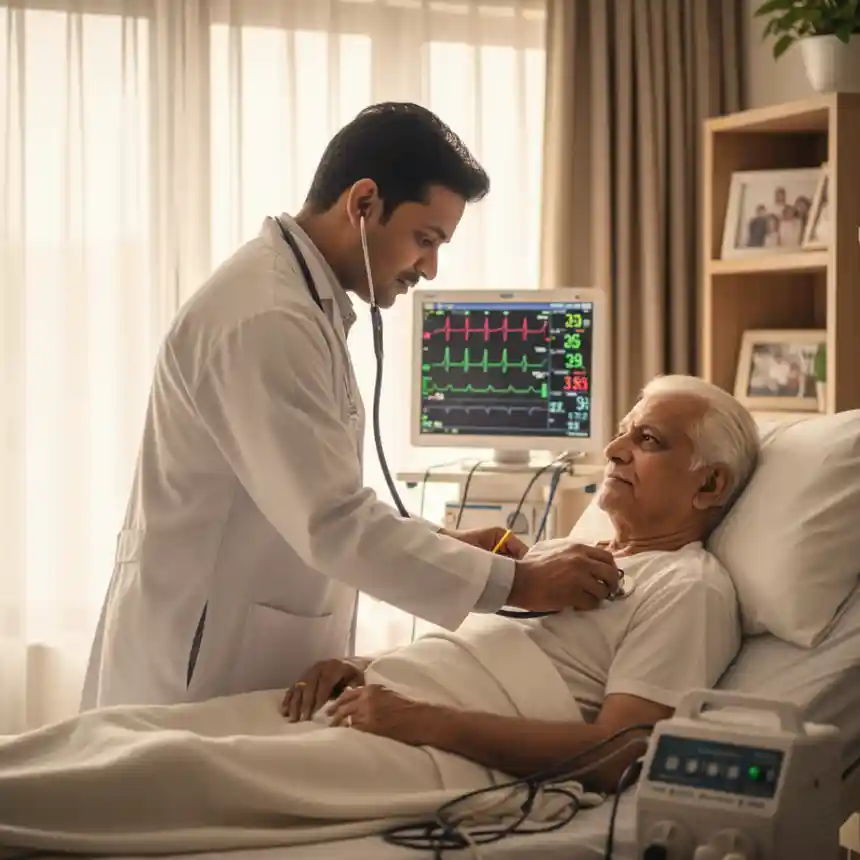
Now imagine a trained medical team arriving at your door, setting up a fully equipped ICU right in your living room, and taking care of every detail — while your father rests in his own bed, surrounded by family.
That is exactly what ICU at home in Bangalore makes possible. And it is changing the way families think about critical care, recovery, and what "getting better" really means.
In this article, we will walk you through everything you need to know — how it works, who it helps, what equipment is involved, and why more and more Bangalore families are choosing home ICU care over extended hospital stays.
What Is ICU at Home? A Simple Explanation
An ICU — short for Intensive Care Unit — is the part of a hospital where patients with serious, life-threatening conditions receive constant, specialised care. Doctors and nurses watch over these patients 24 hours a day, using advanced machines to monitor and support their bodies.
ICU at home (also called Hospital at Home or Home ICU) brings that same level of care to your house. A trained medical team sets up the necessary equipment in your home and provides continuous monitoring and treatment — just like in a hospital ICU, but in a setting that feels safe and familiar.
This is not a watered-down version of hospital care. It is a clinically structured service delivered by qualified doctors, trained ICU nurses, respiratory therapists (specialists who help patients breathe), and support staff — all coordinated by a senior medical professional.
What Makes It Different from Regular Home Nursing?
- Higher medical complexity: Home ICU handles patients who need ventilators, cardiac monitors (machines that track heart activity), feeding tubes, or intravenous (IV) medications.
- 24/7 clinical supervision: A qualified nurse or paramedic is always present. A doctor is available on call and visits regularly.
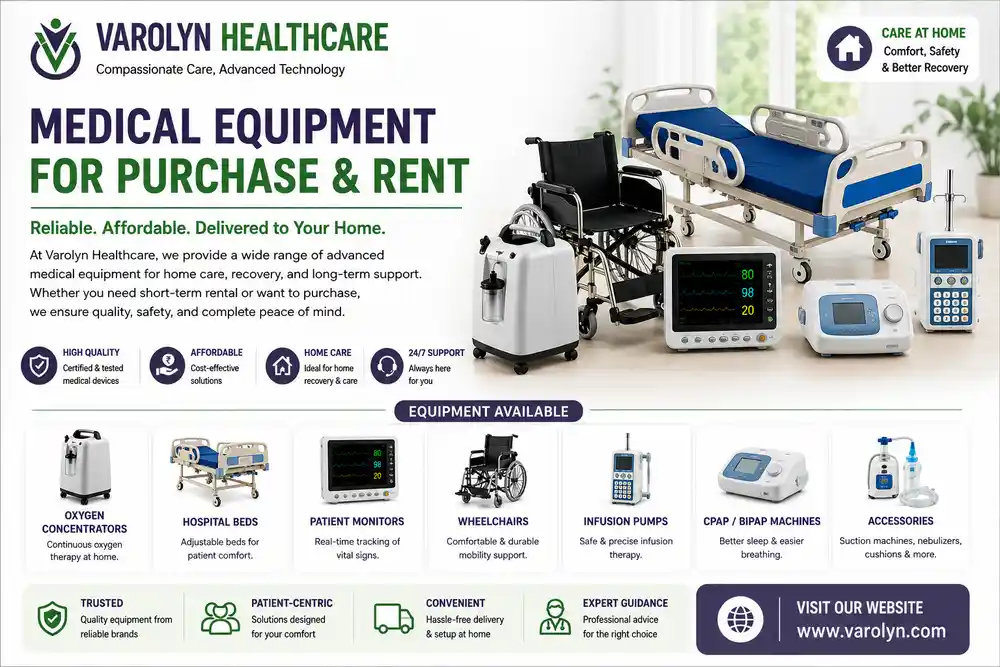
- ICU-level equipment: Multi-parameter monitors, oxygen concentrators, suction machines, infusion pumps, and more — all set up at your home.
- Care plans: Every patient gets an individualised care plan created by a doctor, reviewed regularly as the patient improves.
Why Is ICU at Home Growing So Fast in Bangalore?
Bangalore is one of India's fastest-growing cities. It is also home to some of the country's best hospitals. So why are so many families choosing home ICU care?
The honest answer is: hospital ICUs, as excellent as they are, come with real challenges — especially for long-term or step-down care (the phase after a patient is no longer in crisis but still needs serious medical support).
Hospital ICU Challenges That Families Face
- High costs: ICU beds in Bangalore's private hospitals can be extremely expensive, especially for extended stays of weeks or months.
- Limited family time: Most ICUs allow only short, restricted visiting hours. Family members — the people who comfort and motivate a patient the most — are kept at a distance.
- Hospital-acquired infections: These are infections (called nosocomial infections) that patients can pick up inside hospitals. Critically ill patients with weakened immunity are especially vulnerable.
- Emotional distress: The ICU environment — beeping machines, bright lights, unfamiliar faces — can be deeply frightening and disorienting, especially for elderly patients.
- Bed unavailability: During peak periods or health crises, ICU beds can simply run out.
Why Bangalore Families Are Saying Yes to Home ICU
- Traffic in Bangalore can make hospital visits exhausting and time-consuming for working families.
- Many patients — especially senior citizens — recover faster when they are in a familiar environment with loved ones nearby.
- Home ICU often costs significantly less than a private hospital ICU for stable, step-down patients.
- The rise of reliable home healthcare providers like Varolyn Healthcare has made this option safe, professional, and accessible across the city.
Who Can Benefit from ICU at Home?
Home ICU care is suitable for a wide range of patients. However, it is most commonly used for patients who have moved past the acute (most dangerous) phase of an illness and are now in the recovery or step-down phase — but still need intensive support.
Always consult your treating doctor before transitioning to home ICU. The decision should be made by a qualified medical professional based on the patient's current condition.
Common Conditions Managed with Home ICU Care
- Stroke recovery: Patients who have had a stroke (a sudden interruption of blood supply to the brain) often need weeks or months of careful monitoring and rehabilitation.
- Post-surgery recovery: Complex surgeries — heart, brain, spine, or abdominal — may require ongoing ICU-level monitoring after discharge.
- Chronic respiratory conditions: Conditions like COPD (Chronic Obstructive Pulmonary Disease, a lung condition that makes breathing difficult) or respiratory failure may require ventilator support at home.
- Neurological conditions: Patients with Guillain-Barré syndrome, ALS, or traumatic brain injury (TBI) often require long-term, intensive care that is better managed at home.
- Cancer patients: Those undergoing palliative care (comfort-focused care) or recovering from aggressive treatment may benefit greatly from being at home.
- Elderly patients with multiple conditions: Senior citizens with heart disease, diabetes, kidney disease, or dementia often do better in a familiar, low-stress environment.
- COVID-19 recovery: Many patients recovering from severe COVID-19 needed prolonged oxygen support and monitoring — a need that home ICU services met effectively.
What Equipment Is Used in a Home ICU Setup?
One of the most common questions families ask is: "Can you really set up a proper ICU at home?" The answer is yes — and the equipment used is the same hospital-standard equipment you would find in a clinical ICU.
Here is a look at what a typical home ICU setup in Bangalore includes:
Essential Monitoring Equipment
- Multi-parameter monitor: Tracks heart rate, blood pressure, oxygen levels (called SpO2), respiratory rate, and temperature — all in real time.
- ECG monitor: Continuously records the electrical activity of the heart to catch any irregularities early.
- Pulse oximeter: A small device placed on the finger to measure how much oxygen is in the blood.
Respiratory Support Equipment
- Ventilator: A machine that breathes for (or assists breathing in) patients who cannot breathe adequately on their own.
- BiPAP / CPAP machine: These are non-invasive (no tube into the airway) machines that support breathing with air pressure — commonly used for sleep apnoea and respiratory conditions.
- Oxygen concentrator: A device that pulls oxygen from the surrounding air and delivers it to the patient at a higher concentration.
- Suction machine: Clears secretions (mucus and fluids) from the airways to keep them open and prevent infection.
Medication and Nutrition Support
- Infusion pump: Delivers precise amounts of IV (intravenous, through the vein) fluids or medications over time.
- Ryle's tube / Nasogastric tube: A thin tube passed through the nose into the stomach for patients who cannot eat by mouth — used for nutrition and medication delivery.
- Urinary catheter care: Managed by trained nurses to prevent infection.
Additional Support
- ICU-level adjustable beds and anti-decubitus (pressure-sore prevention) mattresses
- Wound care and dressing supplies
- Emergency medication kit
- Portable lab services for regular blood tests at home
The Varolyn Healthcare Home ICU Experience: What Actually Happens
If you are considering ICU at home in Bangalore for a loved one, here is a simple, step-by-step picture of how the process works with Varolyn Healthcare.
Step 1 — Free Consultation and Assessment
You reach out to Varolyn. A senior medical coordinator speaks with you about the patient's current condition, hospital reports, and your home environment. This is a no-pressure, informative conversation to understand your needs.
Step 2 — Medical Review and Care Plan
A Varolyn doctor reviews the patient's case — including hospital discharge summaries and doctor recommendations — and designs a personalised care plan. This plan includes monitoring schedules, medication management, physiotherapy needs, dietary requirements, and emergency protocols.
Step 3 — Home Setup
The Varolyn team arrives at your home and professionally sets up all required equipment. They assess the room for safety, ventilation, and accessibility. The entire setup is typically completed within a few hours.
Step 4 — Round-the-Clock Care Begins
Trained ICU nurses take shifts to ensure continuous, 24/7 care. Vital signs are monitored and recorded regularly. The attending doctor visits as per the care plan and is available on call around the clock.
Step 5 — Ongoing Communication with Family
Varolyn believes that family is part of the care team. Daily updates are shared with the family. Caregivers are educated on how to support the patient — from repositioning to hygiene — safely and confidently.
Step 6 — Step-Down and Transition
As the patient improves, the care plan is adjusted. Intensive equipment is gradually removed. The patient transitions smoothly to home nursing, physiotherapy, or full independence — whichever is appropriate.
The Science Behind It: Why Patients Actually Recover Faster at Home
This is not just a feel-good idea. There is growing medical evidence supporting the benefits of hospital-at-home care for appropriate patients.
The Healing Power of Familiar Environments
Research shows that patients in familiar surroundings experience less stress and anxiety. Lower stress means the body's healing systems — the immune response (the body's defence against disease) and the endocrine system (the system that produces hormones) — work more efficiently.
Reduced Risk of Infections
Hospital-acquired infections are a serious concern for critically ill patients. At home, the patient is not exposed to the wide variety of bacteria and viruses present in a busy hospital. Studies published by global health institutions have found significantly lower rates of certain infections among hospital-at-home patients.
Better Sleep and Rest
ICU environments are notoriously disruptive to sleep — bright lights, constant noise, and frequent interventions. At home, the patient can rest in a quieter, darker, more comfortable space. Good sleep is essential for recovery.
Family Presence as Medicine
The presence of family members has measurable positive effects on patient outcomes. Family members provide emotional comfort, help with motivation during physiotherapy, and often notice subtle changes in the patient's condition quickly — which can be lifesaving.
Reduced ICU Delirium
ICU delirium (sudden severe confusion and disorientation that commonly affects ICU patients) is far less common at home. Being in a familiar place, with familiar faces and sounds, significantly reduces this distressing condition — especially in elderly patients.
Is ICU at Home Safe? Addressing Your Biggest Concerns
It is completely natural to feel nervous about this. Entrusting a loved one's critical care to a home team requires real trust. Here are the most common concerns — and honest answers.
"What if there is an emergency?"
Varolyn's home ICU teams are trained in emergency response, including CPR (cardiopulmonary resuscitation — a technique to restart the heart and breathing) and airway management. Every team carries an emergency medication and equipment kit. A doctor is always on call. The care plan includes clear escalation protocols, and the team is trained to arrange rapid hospital transfer if needed.
"Are the nurses really qualified?"
Yes. Varolyn employs only registered nurses with ICU experience. All team members undergo background verification and regular clinical training. Supervision by a senior doctor is built into the care model.
"What if the equipment fails?"
All equipment is regularly serviced and maintained. Backup equipment is arranged for critical devices like ventilators and oxygen concentrators. The team is trained to respond to equipment alarms and failures quickly and safely.
"Will my home be suitable?"
Most homes in Bangalore can be adapted for home ICU care. The Varolyn team conducts a home assessment before setup and advises on any changes needed — such as rearranging furniture for space, ensuring a reliable power supply, or arranging a generator or UPS (uninterrupted power supply) for critical equipment.
Home ICU vs. Hospital ICU: A Clear Comparison
- Environment: Home ICU — familiar, calm, personalised. Hospital ICU — clinical, busy, often stressful.
- Family access: Home ICU — unlimited. Hospital ICU — restricted visiting hours.
- Infection risk: Home ICU — significantly lower. Hospital ICU — higher due to shared clinical environment.
- Cost: Home ICU — often more affordable for stable, step-down patients. Hospital ICU — higher for extended stays.
- Personalisation: Home ICU — highly personalised care plans. Hospital ICU — standardised protocols for multiple patients.
- Sleep quality: Home ICU — better. Hospital ICU — frequently disrupted.
- Emergency resources: Home ICU — on-call doctor, emergency kit, hospital transfer protocol. Hospital ICU — full in-house emergency team.
Important: Hospital ICU remains the right choice for patients in the acute, most critical phase of illness. Home ICU is most appropriate for stable, step-down patients — always as decided by a qualified doctor.
Real-Life Scenarios: Families Across Bangalore Who Chose Home ICU
To bring this to life, here are some examples of the kinds of situations where home ICU care makes a real difference. (These are illustrative scenarios representing common patient journeys, not individual case studies.)
The Retired Teacher After a Stroke
A 72-year-old retired teacher from Jayanagar suffered a major stroke. After two weeks in a hospital ICU, he was stable but still needed a feeding tube, regular physiotherapy, and constant monitoring. His family was exhausted from hospital visits in Bangalore's heavy traffic. With a home ICU setup, he returned home, his wife could be with him all day, and his physiotherapy happened in his own room. Three months later, he was walking with support.
The Young Professional After Heart Surgery
A 45-year-old IT professional from Whitefield underwent open-heart surgery. After discharge, she needed wound care, cardiac monitoring, and IV medications. Her young children could finally be with their mother. Within six weeks, she was off monitoring equipment and back to gentle activity.
The Elderly Patient with COPD
An 80-year-old grandfather from Malleswaram with advanced COPD needed long-term oxygen therapy and periodic BiPAP support. His family chose home ICU care over repeated hospitalisation. Managed comfortably at home, he spent his final months in dignity, comfort, and peace — surrounded by three generations of his family.
The Role of Physiotherapy and Rehabilitation in Home ICU Recovery
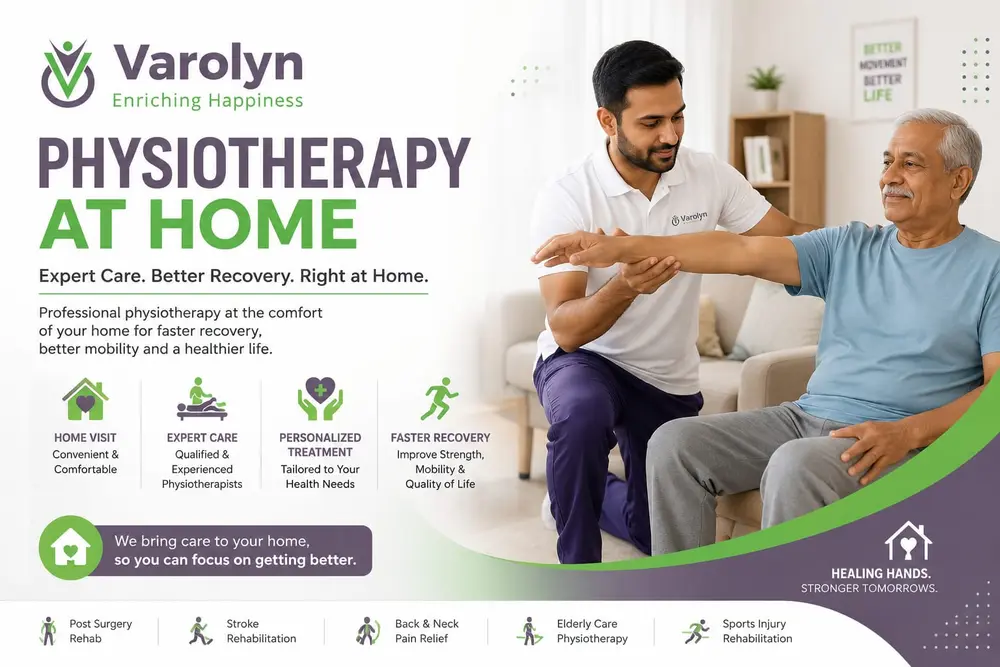
Recovery from critical illness is not just about keeping vital signs stable. It is about rebuilding strength, movement, and independence. Physiotherapy (physical therapy — exercises and techniques to restore movement and function) is a core part of Varolyn's home ICU service.
Why Physiotherapy Matters in ICU Recovery
- Bed rest weakens muscles rapidly — a condition called ICU-acquired weakness. Even a few days of bed rest can cause significant muscle loss.
- Chest physiotherapy helps clear mucus from the lungs and reduce the risk of pneumonia (a lung infection).
- Early mobilisation (getting the patient moving as soon as safely possible) is proven to speed up recovery and reduce complications.
- Physiotherapy also helps with joint stiffness, balance, and coordination — critical for stroke and surgery patients.
Varolyn's physiotherapists work alongside the nursing and medical team, adjusting exercises as the patient progresses — from passive movements (the therapist moves the patient's limbs) to active exercises the patient does independently.
Supporting the Family: You Are Part of the Care Team
At Varolyn, we believe that healing happens best when the whole family is involved — not sidelined. Our team makes sure family members and primary caregivers are educated, supported, and confident.
- Caregiver training: We teach family members safe techniques for repositioning, oral care, and recognising warning signs.
- Daily briefings: The nursing team gives clear, plain-language updates every day.
- Emotional support: Caring for a critically ill loved one is emotionally draining. Our team is trained to be sensitive, warm, and reassuring.
- Nutritional guidance: Dietary advice is provided to support the patient's recovery alongside medical treatment.
- 24/7 helpline: Family members can call the Varolyn medical team any time, day or night, if they have concerns.
How to Know If Your Loved One Is Ready for Home ICU Care
The transition from hospital to home ICU is always a medical decision made by a qualified doctor. However, here are some general indicators that a patient may be a good candidate — always to be confirmed by your treating physician.
- The patient is past the acute crisis phase and is medically stable.
- Vital signs are within an acceptable range and not changing rapidly.
- The patient's condition requires ongoing monitoring or support but not immediate surgical intervention.
- The home environment can be safely adapted for medical equipment.
- A responsible family member or caregiver is present and willing to be involved.
- The treating hospital doctor has given clearance for discharge to home ICU care.
Please remember: this is a guide, not a clinical checklist. Only a qualified doctor who knows your loved one's full medical history can make this call.
Take the First Step: Book Your Free Consultation with Varolyn Healthcare
If you are caring for a seriously ill loved one in Bangalore — or anywhere across India — you do not have to choose between excellent medical care and being at home together.
Varolyn Healthcare brings ICU-level ICU care, qualified nursing, physiotherapy, and compassionate support directly to your home. Our team is experienced, empathetic, and available around the clock.
You deserve to focus on your loved one — not on logistics, traffic, or hospital paperwork. Let us handle the clinical complexity while you provide the love.
- ✅ Qualified ICU nurses and doctors
- ✅ ICU-level equipment setup at your home
- ✅ Personalised care plans reviewed regularly
- ✅ 24/7 support and on-call doctor
- ✅ Transparent, compassionate communication with families
- ✅ Serving Bangalore and pan-India
Contact Varolyn Healthcare today to book your FREE consultation. A senior medical coordinator will speak with you, understand your situation, and guide you through your options — with no pressure and no obligation. Because every patient deserves to heal at home, with dignity.
Key facts
- ICU at home (Hospital at Home) brings ICU-level critical care including ventilators, multi-parameter monitors, and 24/7 nursing to the patient's residence, making it suitable for medically stable step-down patients.
- Hospital-acquired infections (nosocomial infections) pose a significant risk to critically ill patients; home ICU care substantially reduces this exposure by removing the patient from the shared hospital environment.
- ICU delirium — sudden severe confusion affecting up to 80% of ICU patients in some studies — is significantly less common when patients recover in familiar home surroundings with family present.
- Extended bed rest in hospital ICUs can cause rapid muscle loss, a condition called ICU-acquired weakness; early physiotherapy and mobilisation at home is proven to speed recovery and reduce complications.
- Family presence during recovery has measurable positive effects on patient outcomes, including reduced anxiety, better treatment compliance, and earlier detection of deteriorating conditions.
- Home ICU care is typically more cost-effective than private hospital ICU care for stable, step-down patients requiring prolonged monitoring and support in cities like Bangalore.
- Conditions commonly managed with home ICU care in India include stroke recovery, post-cardiac or post-surgical care, COPD with ventilator dependence, neurological disorders, and cancer palliative care.
Frequently asked questions
What exactly is ICU at home, and is it as safe as a hospital ICU?
ICU at home brings ICU-level critical care — including monitors, ventilators, trained ICU nurses, and on-call doctors — directly to the patient's house. For medically stable, step-down patients (those past the acute crisis phase), it is considered clinically safe and is supported by growing medical evidence. It is not suitable for patients in the most acute phase of illness — that decision is always made by a qualified doctor.
Who is eligible for home ICU care in Bangalore?
Patients who have passed the acute critical phase of illness and are medically stable — but still need intensive monitoring, ventilator support, IV medications, or skilled nursing — are typically good candidates. Common conditions include stroke recovery, post-surgery care, COPD, neurological conditions, and cancer palliative care. Eligibility is always determined by a qualified treating doctor.
What equipment is set up in a home ICU?
A home ICU typically includes a multi-parameter monitor (for heart rate, blood pressure, and oxygen levels), a ventilator or BiPAP/CPAP machine, an oxygen concentrator, a suction machine, an infusion pump for IV medications, a medical-grade adjustable bed, and a complete emergency medication kit. All equipment is hospital-standard and regularly maintained.
How much does ICU at home cost compared to a hospital ICU in Bangalore?
For stable, step-down patients who need prolonged care, home ICU is generally significantly more affordable than a private hospital ICU in Bangalore. Exact costs vary based on the patient's condition, equipment needed, and duration of care. Contact Varolyn Healthcare for a personalised, transparent quote after a free consultation.
What happens in a medical emergency at home?
Varolyn's home ICU teams are trained in emergency response, including CPR and airway management. Every team carries emergency medications and equipment. A doctor is on call 24/7. Clear escalation protocols are part of every care plan, including rapid hospital transfer procedures if the patient's condition requires it.
Can family members be present during home ICU care?
Absolutely — and that is one of the biggest advantages of home ICU care. Unlike hospital ICUs with restricted visiting hours, family members can be present at any time. Varolyn actively involves families through daily updates, caregiver training, and ongoing communication. Family presence is considered a core part of the healing process.
How do I get started with home ICU care for my loved one in Bangalore?
Simply contact Varolyn Healthcare to book a free consultation. A senior medical coordinator will speak with you about the patient's current condition and hospital reports, explain your options clearly, and guide the transition from hospital to home — coordinating with the treating doctor throughout the process.